
Cooling Systems That Work When Temperatures Climb
Air conditioning repair in City unavailable for systems that fail during peak heat or no longer cool effectively
American Heating and Air provides professional air conditioning repair in McIntyre, Milledgeville, Gray, Eatonton, and surrounding Central Georgia communities. When your AC stops cooling, runs constantly without reaching the temperature on your thermostat, makes unusual noises, or fails completely during the summer heat, our technicians can diagnose the issue and recommend the appropriate repair.
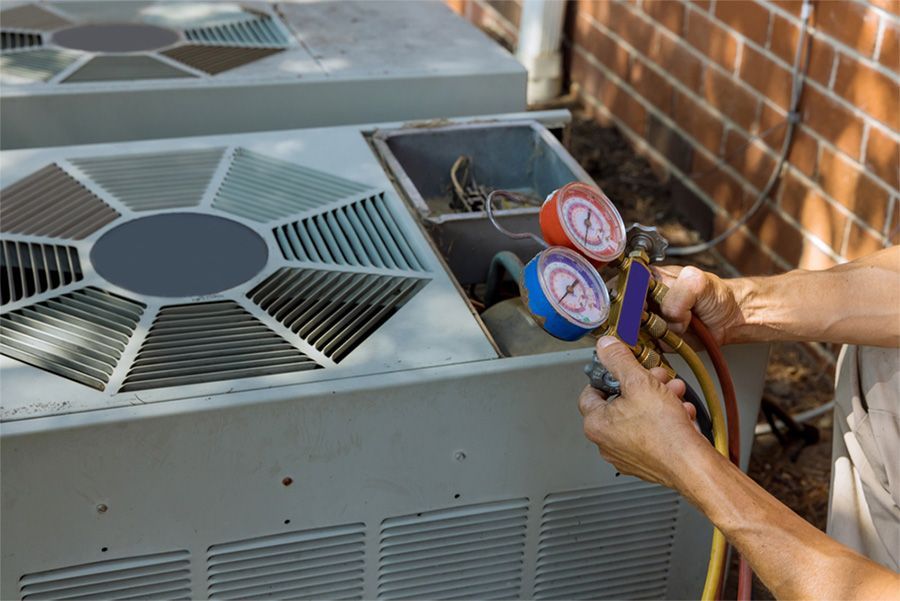
The repair process begins with diagnostic testing to identify whether the problem stems from refrigerant levels, electrical components, mechanical wear, or airflow restrictions. Technicians measure temperature splits across coils, test capacitor strength, check refrigerant pressures against manufacturer specifications, and inspect condensate drainage to pinpoint the failure point rather than replacing parts unnecessarily.
Our air conditioning repair services address a wide range of cooling system problems, including:
- Compressor failures
- Refrigerant leaks and low refrigerant levels
- Frozen evaporator coils
- Failed capacitors and electrical components
- Airflow restrictions
- Condensate drainage issues
- Mechanical wear and failing AC components
- Systems that run continuously but do not cool effectively
Schedule a diagnostic evaluation to determine what component is causing your cooling system to underperform or stop entirely.
What Proper Air Conditioning Repair Requires
Most cooling failures occur because one component in the refrigeration cycle stops working, which prevents heat removal from your indoor air. Compressors pump refrigerant through the system, evaporator coils absorb indoor heat, condenser coils release that heat outdoors, and expansion valves regulate refrigerant flow—when any single part fails, the entire cooling process stops. Refrigerant leaks cause gradual cooling loss as charge levels drop below what the system needs to absorb heat efficiently, while electrical failures prevent the compressor or fan motors from running at all.
After repairs are completed, you'll notice your system reaches the thermostat setting without running continuously, indoor humidity drops as the evaporator coil operates long enough to condense moisture, and air from vents feels consistently cold rather than cycling between cool and lukewarm. The outdoor unit will run in normal cycles instead of short-cycling or refusing to start, and you won't hear the clicking sound of a failing capacitor or the hissing that indicates refrigerant escaping from a leak point.
Some repairs require refrigerant recovery and recharge according to EPA regulations, while others involve component replacement without opening the sealed refrigeration system. Compressor replacement represents a major repair that often costs enough to justify evaluating whether the entire outdoor unit should be replaced, particularly if the system uses R-22 refrigerant that is no longer manufactured and has become expensive to source.
What Proper Air Conditioning Repair Requires
Homeowners facing unexpected cooling failures during Georgia's summer months typically want to understand what caused the breakdown and how quickly normal operation can be restored.
What causes an air conditioner to stop cooling even though it's running?
The most common cause is low refrigerant due to a leak, which prevents the evaporator coil from absorbing enough heat to cool your indoor air. A failed capacitor can also prevent the compressor from starting properly, leaving only the fan running without actual refrigeration taking place.
How long does air conditioning repair typically take?
Simple repairs like capacitor replacement or contactor replacement take less than an hour, while refrigerant leak detection, repair, and recharge can take several hours depending on where the leak is located. Compressor replacement or evaporator coil replacement requires more extensive work and typically takes a full day.
When should I repair versus replace my air conditioning system?
If your system is less than ten years old and the repair cost is less than half the replacement cost, repair typically makes sense. Systems older than fifteen years using R-22 refrigerant that need major component replacement often cost less to replace entirely than to repair and recharge with increasingly expensive discontinued refrigerant.
What happens if I continue running a system that isn't cooling properly?
Running a system with low refrigerant causes the compressor to overheat and fail permanently, turning a refrigerant leak repair into a much more expensive compressor replacement. Frozen evaporator coils from restricted airflow can cause water damage when ice melts and overwhelms the condensate drain system.
How can I tell if the problem is the air conditioner or the thermostat?
If the outdoor unit runs but produces no cooling, the problem is in the refrigeration system itself. If the outdoor unit doesn't start at all, the issue could be the thermostat, a tripped breaker, a failed contactor, or a safety switch that has shut the system down to prevent damage.
American Heating and Air provides detailed diagnostics before beginning any repair work, so you understand exactly what failed and why. Arrange an on-site inspection to determine which component needs replacement and receive a clear estimate before any work begins.